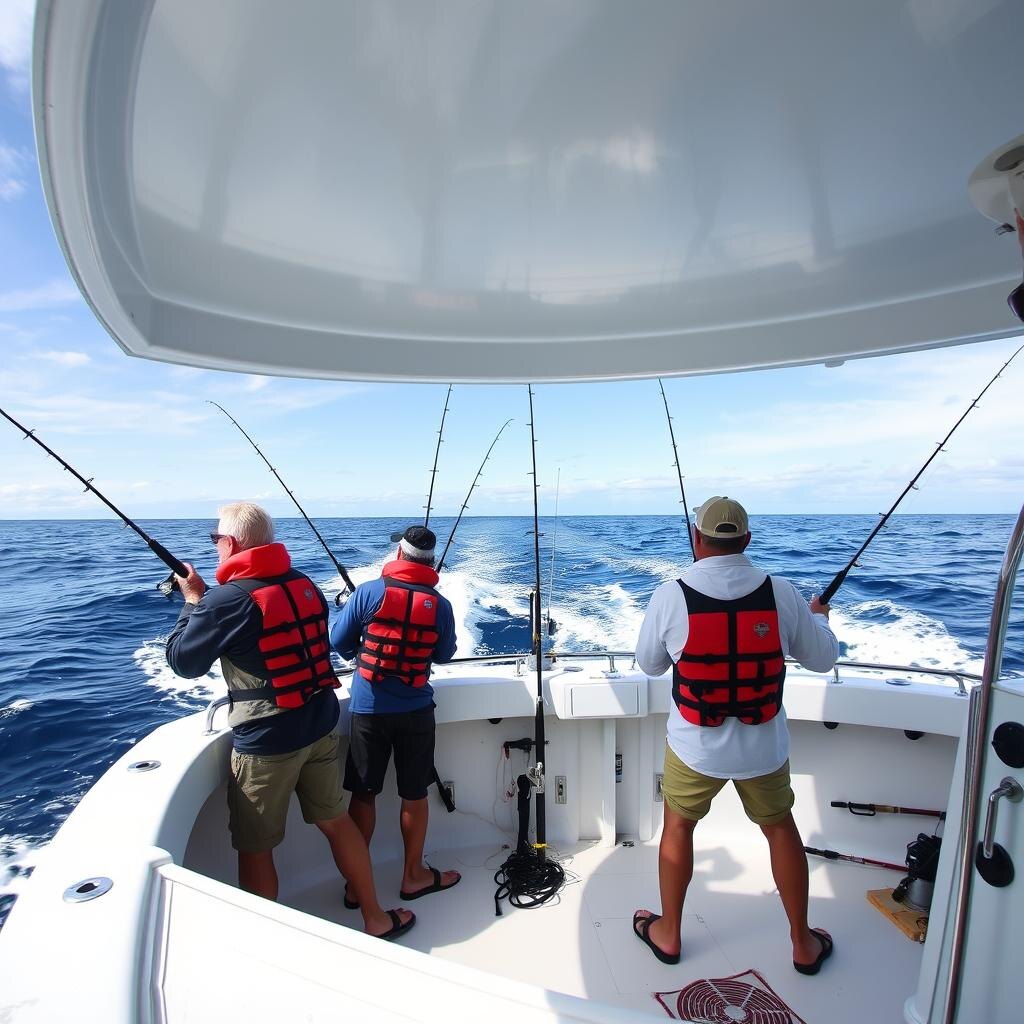
Plenty of new charter captains buy a recreational boat policy, add their boat, and assume they are covered to take paying customers fishing. They are not. The recreational policy contains an exclusion that quietly turns it off the instant money changes hands — and most operators do not discover it until a passenger is hurt and the claim is denied. Here is exactly how that exclusion works and what you actually need instead.
The Passengers-for-Hire Exclusion
Every recreational boat policy — and every standard business owners policy (BOP) — contains language excluding the vessel while it is carrying passengers for a fee or being used for a commercial purpose. The wording varies, but the effect is identical: the policy is built for the owner and invited guests, not for paying customers. The carrier priced it as a pleasure-use risk, and a charter is not a pleasure-use risk.
The trigger is the money, not the boat. You can own the exact same 24-foot bay boat as your neighbor, but the moment a customer hands you a fee to take them fishing, your boat is a commercial passenger vessel and your neighbor's is not. The hull is identical; the legal status is not.
Why "Just This Once" Is Still Excluded
A common misunderstanding is that the exclusion only bites if you charter full-time. It does not. The exclusion is written around the use at the time of the loss, not your business model. Take one paid trip, have one accident, and the carrier looks at what the boat was doing in that moment — carrying a passenger for hire — and applies the exclusion. Occasional, part-time, or "side hustle" charters are exactly the situations where operators get caught uninsured.
Passengers Sue Under Maritime Law
When a paying customer is injured, the claim does not proceed as an ordinary land slip-and-fall. It proceeds under general maritime law, which holds the vessel owner to a real duty of reasonable care toward passengers. The common injuries are predictable:
- Slip, trip and fall on decks made slick by fish slime, bait, blood, spray, and ice
- Falls when the boat drops off a wave or makes a hard turn in a chop
- Hook, gaff, and tackle injuries to inexperienced guests
- Man-overboard — the catastrophic-severity claim, which can trigger wrongful-death suits under the Death on the High Seas Act (DOHSA) when it occurs beyond three nautical miles
These are not edge cases. A moving, wet, hard-surfaced workplace full of inexperienced people is one of the most reliable injury environments in commercial operation.
Why Your Waiver Probably Won't Save You
Many captains lean on a signed liability waiver as their protection. Maritime courts treat pre-injury passenger waivers skeptically and frequently limit or void them. A release may discourage a marginal claim, but it rarely stops a serious-injury or wrongful-death suit. Treat the waiver as a useful layer of risk reduction — never as a substitute for insurance. The waiver is the paper; the insurance is what actually pays the claim.
What You Actually Need: Commercial P&I + PLL
The coverage built for this exposure is Protection & Indemnity (P&I) with Passenger Legal Liability (PLL):
- P&I is the marine equivalent of general liability — it responds to bodily injury and property damage to passengers and third parties, collision and allision damage, wreck removal, pollution liability, and legal defense, all arising from operating your vessel.
- PLL is the passenger-injury component, usually written inside the P&I policy but underwritten on its own variables: how many passengers you carry, whether you run an uninspected 6-pack or an inspected Subchapter T vessel, your safety equipment, and your loss history.
Limits commonly run $300,000 to $1,000,000, and many operators add a marine umbrella on top because maritime wrongful-death and serious-injury awards run high.
The Bottom Line
A recreational policy is the wrong tool for a commercial job, and it will say so — in the exclusions — at the worst possible moment. The fix is straightforward: a commercial marine policy with P&I and passenger legal liability, sized to your real passenger count and navigation range. If you are taking money to put people on fish, you are running a commercial vessel under maritime law, and you need coverage that knows it.