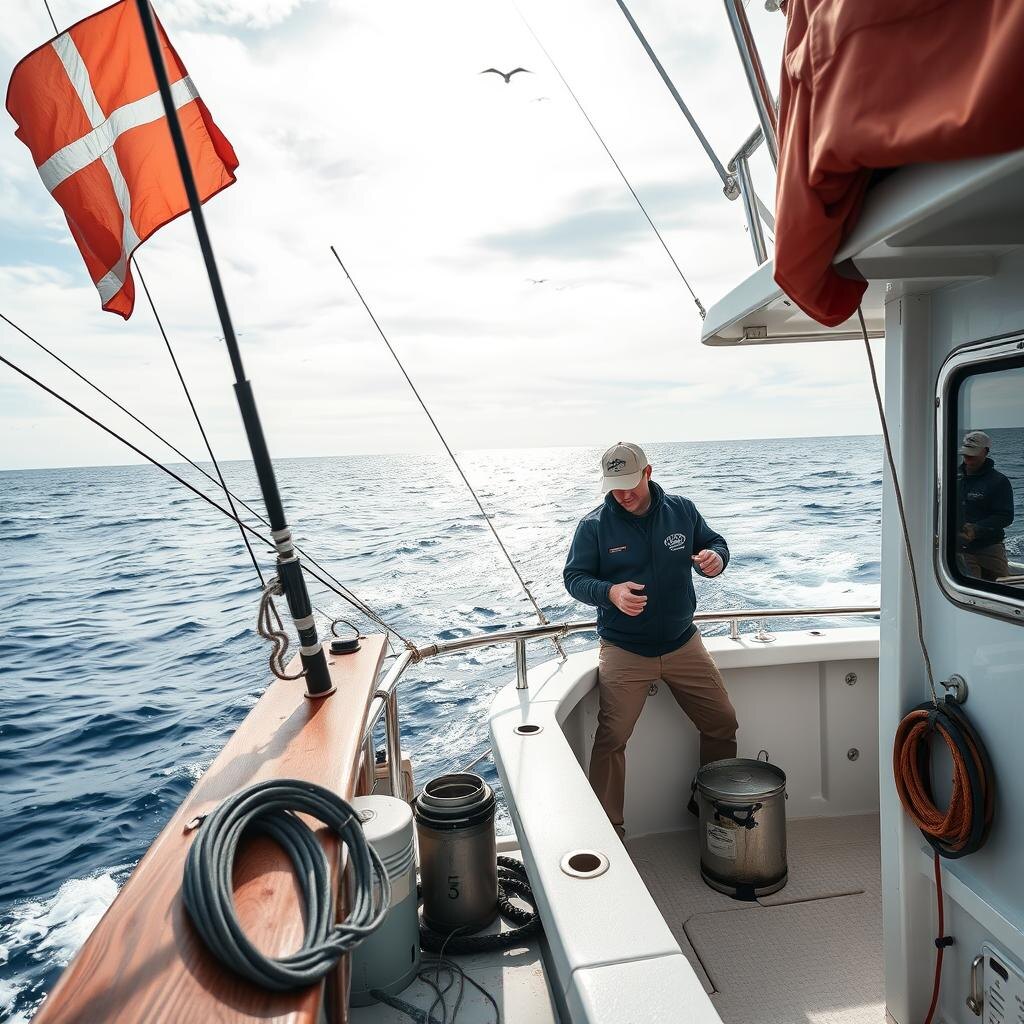
The crew-injury problem is where charter operators get hurt worst — not because the injuries are unusual, but because the insurance they assume covers them often does not. If you hire a mate or a deckhand and that person is hurt at work, their remedy is governed by federal maritime law, not the state workers' compensation system. An operator who bought ordinary comp can find the claim flatly denied and the business personally on the hook for medical bills, lost wages, and damages. Here is why, and what to carry instead.
Why State Workers' Comp Excludes Your Crew
State workers' compensation is built for land-based employees, and standard comp policies specifically exclude maritime employment. A charter mate or deckhand is almost always a seaman under federal law, and seamen are carved out of state comp entirely. So the policy you assumed would handle a crew injury simply does not respond — the denial is not a loophole or a dispute, it is the policy working exactly as written. This is the single most common reason a charter crew claim goes uninsured.
The Jones Act: Coverage for Seamen
A seaman is a worker with a substantial connection to a vessel in navigation — which a working charter mate or deckhand typically is. Seamen are covered by the Jones Act, a federal statute that is meaningfully broader than no-fault comp. Under the Jones Act, an injured crewmember can:
- Sue the employer for negligence and recover broad damages, including pain and suffering
- Pursue a claim that the vessel was unseaworthy if some condition of the boat or its gear contributed to the injury
That is a far larger exposure than a state comp claim, because it is fault-based litigation with real damages, not a fixed benefit schedule.
Maintenance & Cure
Layered on top of the Jones Act is the vessel owner's near-automatic, no-fault duty of maintenance and cure. Maintenance covers the injured crewmember's daily living expenses while they recover; cure covers their medical care — both owed until the crewmember reaches maximum medical improvement, and owed regardless of who was at fault. Maintenance and cure is owed even when the captain did nothing wrong, which is why it cannot be managed away with safety policies alone — it has to be insured.
USL&H (Longshore): Coverage for Non-Seamen
Not every maritime worker is a seaman. A worker who is not a seaman but is injured on navigable waters or adjoining areas — for example, dockside work loading the boat — may fall under the Longshore and Harbor Workers' Compensation Act (USL&H), a federal no-fault compensation system. USL&H sits outside state comp just as the Jones Act does, but it operates as a benefit schedule rather than a negligence suit.
Why You Need Both: MEL Enters Here
The trouble is that a single crewmember can arguably fall under either statute depending on the facts of the injury, and you do not get to choose after the fact. For that reason, a well-built charter program pairs:
- USL&H coverage for the non-seaman/Longshore exposure, and
- Maritime Employers Liability (MEL) — the Jones Act coverage that responds to seaman negligence claims and the maintenance-and-cure duty.
Carrying both closes the gap so the claim is covered whichever way it is classified, and the crew coverage is then coordinated with the vessel's P&I so no crew-injury exposure slips between policies.
When a Solo Guide Needs It
If you run alone, with no paid hands, you do not yet have a maritime-employer exposure — but you still need P&I, hull, gear, and trailer/auto. The threshold is simple and important: the moment you put a paid mate or deckhand on the boat, you have created Jones Act exposure, and state comp will not cover it. That includes the busy-season helper, the part-time deckhand, and the second captain you bring on for big trips. The exposure attaches with the first paid hand, not with your tenth.
The Bottom Line
Crew coverage is underwritten on payroll, number of crew, vessel type, and operations — and it is the policy that prevents one back injury from a heavy cooler, or one fall in a seaway, from ending the business. If you employ anyone on the water, confirm you are carrying Jones Act / MEL and USL&H, not a state comp policy that will deny the claim at exactly the wrong moment.