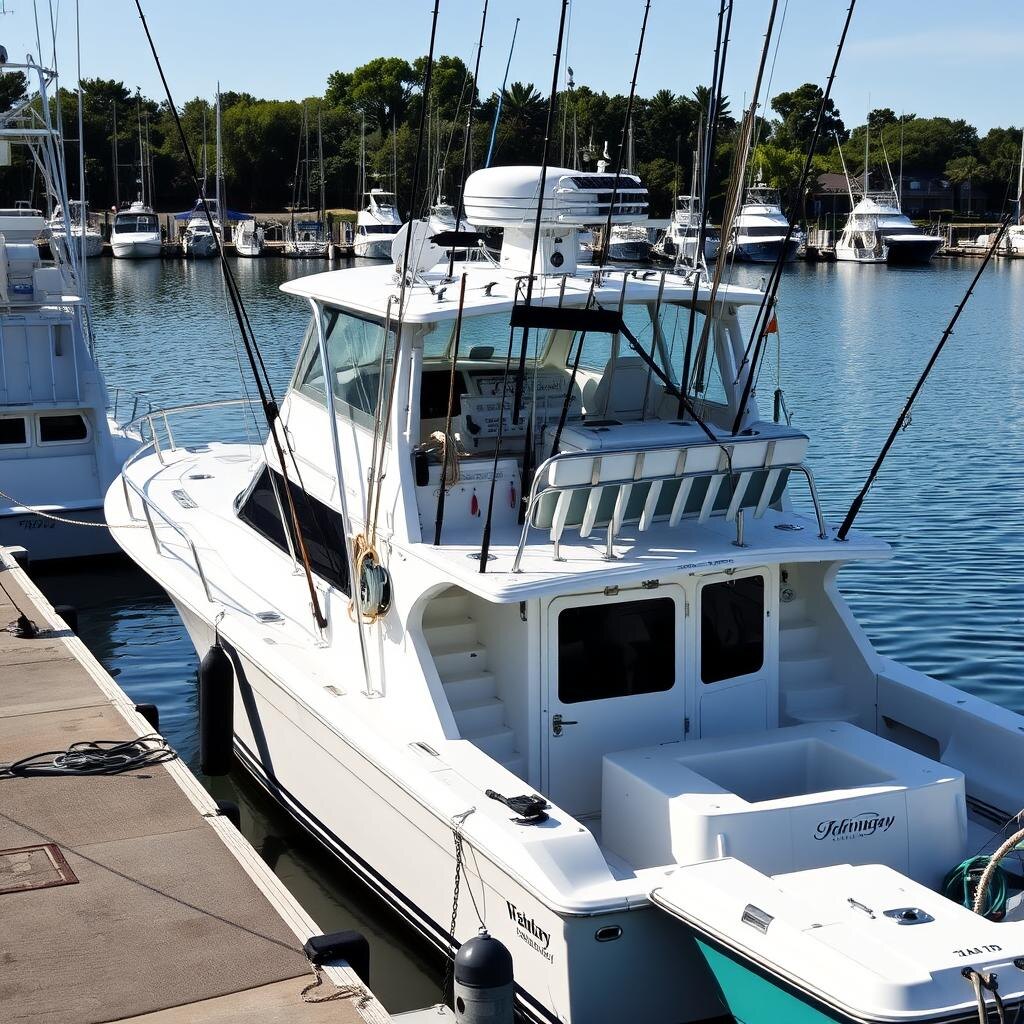
A sportfishing charter or guide business sells access to fishing — but the moment a passenger pays a fee, the boat becomes a commercial vessel operating under federal maritime law, not ordinary state business law. That single fact is why a standard business owners policy or a recreational boat policy leaves a charter captain badly exposed. This guide walks through the coverages a working charter or guide operation actually needs, why each one exists, and what a complete program tends to cost.
Why Charter Insurance Is Different
Land businesses carry commercial general liability (CGL). Charter operations cannot rely on it, because the standard ISO general-liability form specifically excludes watercraft and excludes maritime employment. A passenger injured on a moving boat may bring a claim under general maritime law, and an injured deckhand is covered by the Jones Act rather than state workers' comp. Buy a landlubber policy and think you are covered, and you have written the classic uninsured-loss story of this industry.
Protection & Indemnity (P&I)
P&I is the foundation marine-liability coverage. It responds to bodily injury, property damage, and pollution liability arising out of owning, operating, and navigating the vessel. Where a shop owner carries CGL, a captain carries P&I — it covers liability to passengers and third parties, damage to docks and other boats from a collision or allision, wreck removal if your boat sinks in a channel, fuel-spill liability under OPA 90, and the legal defense for all of it. Limits commonly run $300,000 to $1,000,000, often higher when a marina or tournament requires it.
Passenger Legal Liability
Passenger injury is the single most-claimed exposure in the business. A boat is a wet, hard-surfaced, moving workplace and your customers are usually inexperienced on the water. Passenger Legal Liability responds when a paying guest falls off a wave, takes a treble hook through a hand, slips on fish slime, or is thrown against a gunwale. It is frequently written inside the P&I policy but underwritten on its own variables — chiefly the number of passengers and whether you run a 6-pack or an inspected vessel.
Hull & Machinery
Hull & Machinery (H&M) is the marine equivalent of physical-damage coverage — it pays to repair or replace the boat itself after sinking, fire, lightning (a leading loss on boats with tall outriggers), grounding, storm damage, or theft. For most operators the boat is the most valuable asset in the business, and any lender or marina that financed it will require H&M. Always insure on an agreed-value basis so a total loss pays a figure fixed up front, with no depreciation fight at claim time.
Gear, Trailer & Auto
Two more coverages handle the everyday exposures:
- Fishing Gear & Equipment — an inland-marine-style floater for rods, reels, downriggers, outriggers, trolling motors, and electronics (GPS, radar, sonar, VHF). Gear is the most frequently stolen and damaged category in the business; a ramp-lot break-in can cost a one-boat guide $15,000 to $30,000 overnight.
- Commercial Marine Trailer & Auto — covers the tow vehicle under a commercial-auto form (a personal auto policy can deny a business-use claim) plus the boat trailer for liability and physical damage. For trailerable operations, the riskiest moments often happen on the highway and at the ramp, not on the water.
Crew Coverage
The moment you put a paid hand on the boat, you create maritime-employer exposure. A charter mate or deckhand is typically a seaman under the Jones Act, outside state workers' comp entirely. Charter programs usually pair USL&H (Longshore) coverage with Maritime Employers Liability (MEL / Jones Act) so both fronts are covered, including the no-fault duty of maintenance and cure.
Marine Umbrella
A single serious accident — a passenger fatality offshore, a multi-victim man-overboard — can blow through a $1 million primary limit and reach the captain's personal assets. A Commercial Marine Umbrella stacks $1M to $5M+ over your P&I, passenger, crew, and auto coverage. It must be a marine umbrella written to follow form over marine underlying policies — a standard commercial umbrella excludes watercraft, passengers for hire, and crew.
How Premiums Are Set, and What It Costs
Underwriters weigh captain experience and license grade, years on that body of water, loss history, vessel value, age and horsepower, number of passengers, navigation limits (how far offshore), crew payroll, and whether the boat is a 6-pack or inspected vessel. Clean records, a current marine survey, and realistic navigation limits all lower the price. Indicative annual ranges:
- Inshore flats or bay guide (6-pack): roughly $1,500–$4,000 for a P&I plus gear package.
- Offshore 6-pack sportfisher (P&I + hull on a $150K–$400K boat): roughly $5,000–$15,000+, driven heavily by named-windstorm zone.
- Inspected Subchapter T head boat (7+ passengers, crew): $10,000–$40,000+ depending on passenger count and payroll.
- Marine umbrella ($1M excess): commonly $1,000–$3,000+.
A properly built charter program coordinates all of these so there is no gap between the road, the ramp, and the water. If you are running on a recreational policy or a BOP today, the next bad day is the one that finds out.